
Made in the USA
Stainless tension rods, engineered and stamped
3/4" assemblies in 17-4 PH stainless steel, with PE-stamped capacities, designed, engineered and made in the USA.
Design yours Reserve for your project
First production run planned for spring 2027.
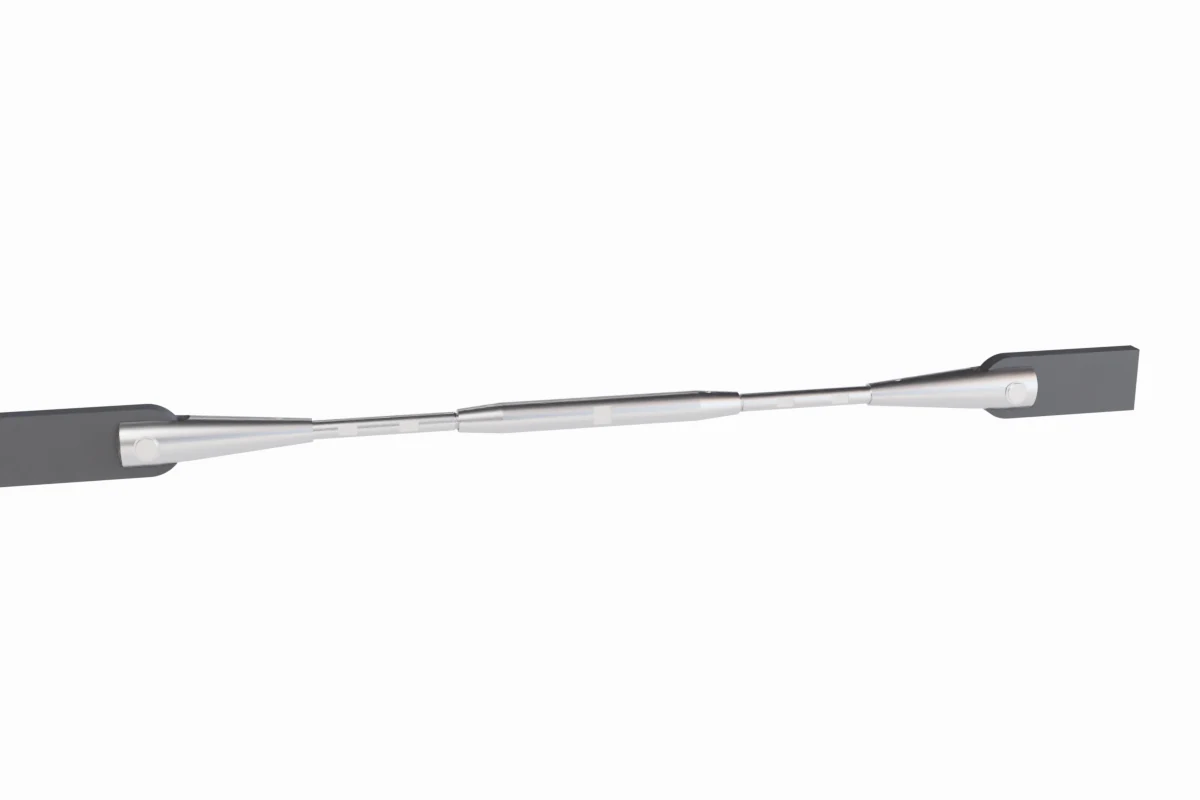
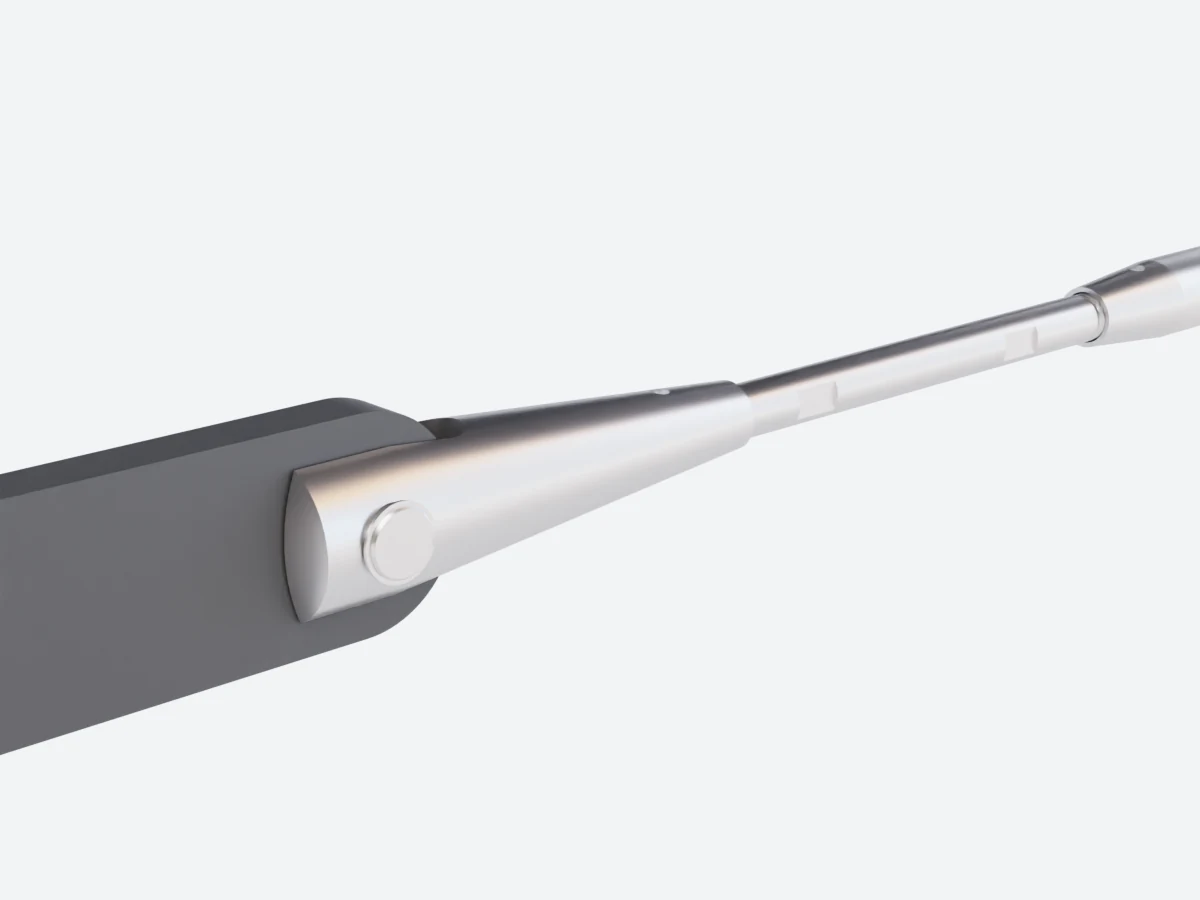
- Pinned to your plate: a 7/8" stainless pin and two retaining rings.
- Red means not yet. One spin draws the rod into the clevis and the turnbuckle at once. Once its red last inch is out of sight, it's in far enough.
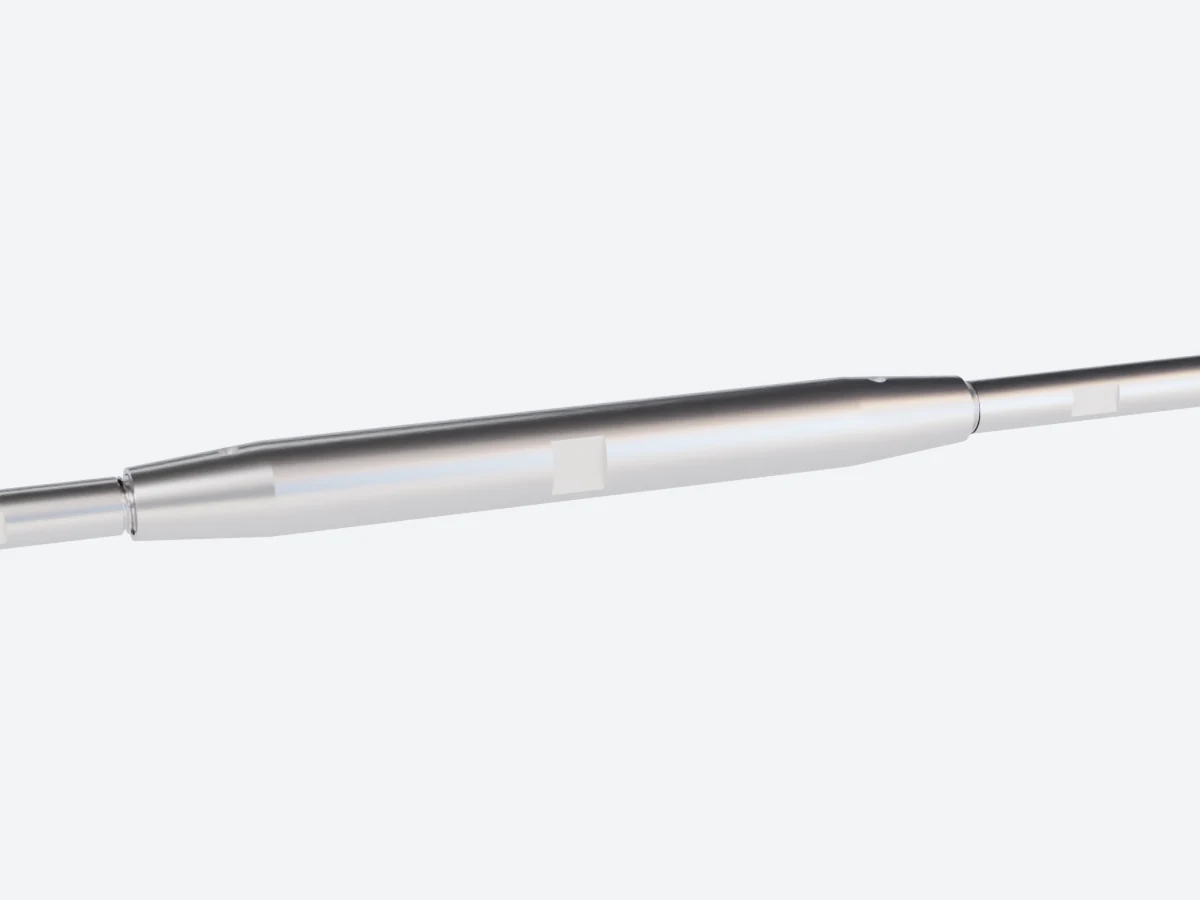
- Snug the clevis nut, then turn the turnbuckle: just 1/8" proud of the rod across its flats, it draws the run tight, with 6" of adjustment.
- The turnbuckle's nuts snug down last, finishing the line. 17-4 PH stainless, PE-stamped to 33.86 kips LRFD and 22.58 kips ASD.

Concentric by design
As close as you can get to connecting two points with a line
- Turned from round bar. The clevises, conical nuts, rod and turnbuckle are each machined from round 17-4 PH stainless bar, and all of them share one axis.
- Still made to install. Wrench flats on the rod and tool divots in the conical nuts give a wrench something to turn and hold on site.
- Rod to clevis, smoothly. The clevis tapers at 5°, and the conical nut carries the same taper on toward the rod: the smoothest transition from rod to clevis we could machine.
- One axis, pin to pin. The tension runs straight down the center of every part it passes through.
In use
Tied, and lifted clear
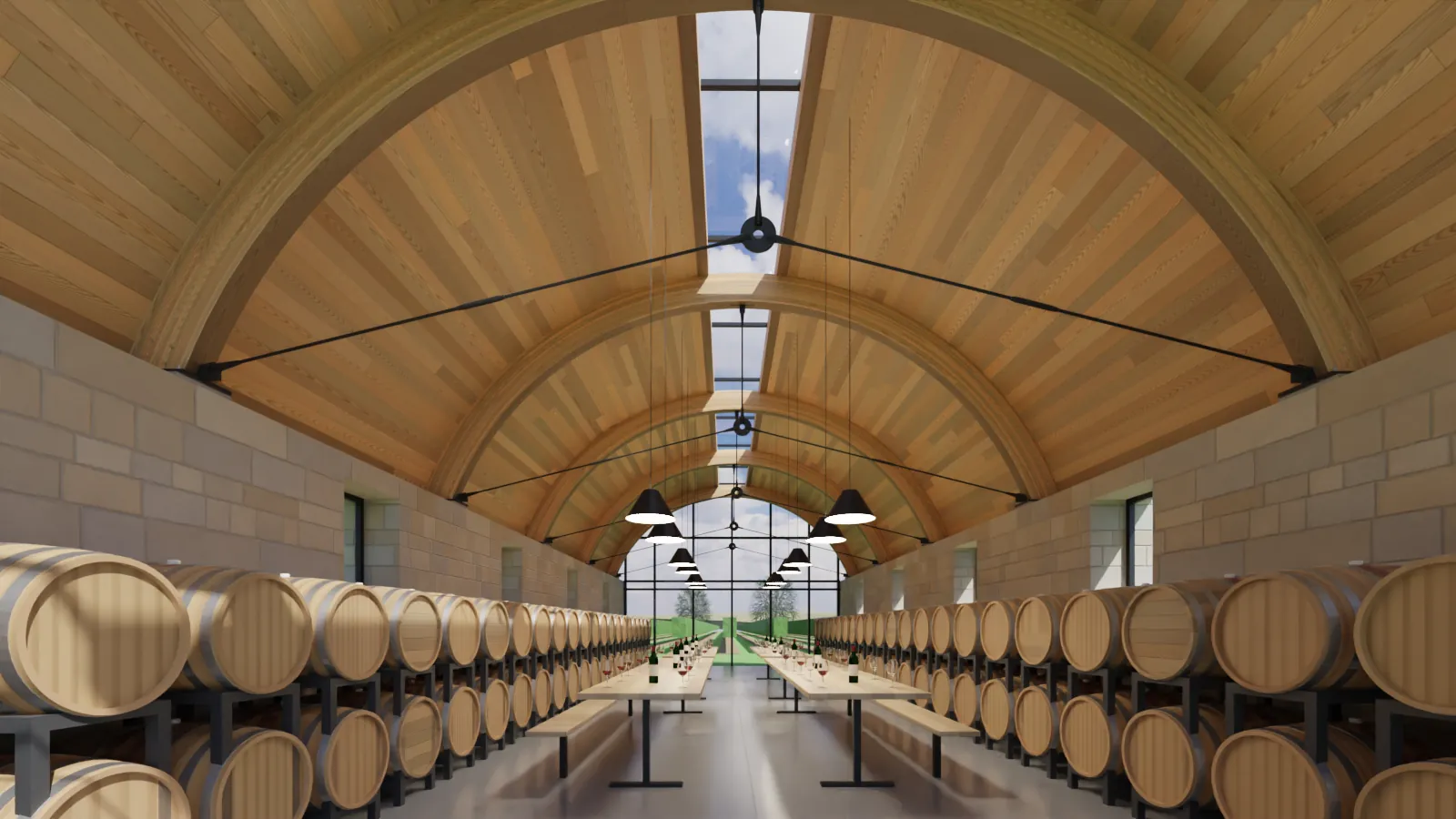
A winery's barrel room under 24-foot glulam arches. Each arch is tied at its feet by two pitched assemblies with turnbuckles, meeting at a center plate that a third assembly hangs from the crown, so the ties clear the room. Every end pins to a steel plate slotted into the glulam and doweled through it.
Design it
One assembly, three choices
- Length. Rods come up to 20 feet each, so an assembly runs to about 20 feet pin to pin on its own and past 40 feet with a turnbuckle.
- Turnbuckle. Adds 6 inches of length adjustment at the middle of the run, for 9 inches in all with the clevises. It's 1-1/4" across with 1" wrench flats, so it stands just 1/8" proud of the rod across its flats and 1/4" at its widest. Without it, the rod turns in its clevises for 3 inches of adjustment.
- Conical nuts. Tapered nuts that thread onto the rod against each fitting, for a finished look. They're decorative and outside the load path.
The details
Machined from one stainless steel
The steel
From aerospace to architecture
17-4 PH is a precipitation-hardening stainless steel, 17% chromium and 4% nickel, developed by Armco Steel and at work in aircraft and gas turbine parts since the 1950s. Its bar has its own Aerospace Material Specification, AMS 5643.
Every structural part of a Concentric assembly is machined from it, then aged to the H1150 condition. What's left is a minimum yield strength of 105 ksi, more than three times that of annealed Type 316, the usual architectural stainless. Every order ships with its mill test reports, showing where the steel was melted.
H1150 is the most ductile of 17-4's standard conditions. ASTM A564 requires it to stretch at least 16% before it breaks; the hardest, H900, is stronger, needs only 10%, and is more prone to cracking. A structural part should yield and stretch before it breaks, not crack, so we give up the extra peak strength for H1150's ductility, toughness and resistance to stress corrosion cracking.
The trade is the last reach of corrosion resistance. Type 316 holds out longer in harsh chloride exposure, like seawater spray. 17-4 PH resists corrosion about as well as Type 304, and the stamped drawings cover dry and damp interiors and normally exposed exteriors, where most tension rods live.
What lithe architecture always needs is strength.
- Minimum yield strength
- 105 ksi
- Minimum tensile strength
- 135 ksi
- Minimum elongation
- 16%
- Condition
- H1150, ASTM A564
Easy to approve
Capacities your engineer can use
The assembly was evaluated to ANSI/AISC 370-21, the specification for structural stainless steel, by Aerospace Structural Research Corp (ASR), with limit-state calculations and nonlinear finite element analysis of the pinned connection: the same modeling ASR does for its aerospace clients' rocket components. Its capacities are on PE-stamped drawings.
Every fitting is stronger than the rod, so the rod governs: net-section rupture at its 3/4-10 thread.
- LRFD design strength
- 33.86 kips
- ASD allowable strength
- 22.58 kips
- Loading
- Static axial tension
The first production run
Reserve assemblies now
The first run is planned for spring 2027. Reserving costs nothing: tell us about your project, and we'll call, then send a quote with first-run pricing. Stamped drawings for a named project are on request.